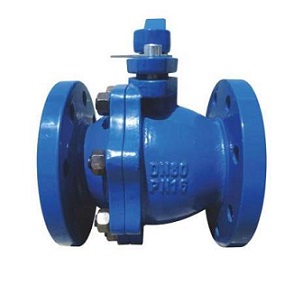
BS Cast Iron Ball Valve

A high-performance on/off valve engineered to meet British Standards (BS), featuring a rugged cast iron construction and precision-engineered ball mechanism for reliable flow control in industrial applications involving water, steam, oil, and gas.

View Technical Specs
DIN Resilient Seated NRS Gate Valve

Product Overview

The BS Cast Iron Ball Valve is specifically designed to comply with British Standards, making it the ideal choice for systems operating in the UK and other regions adhering to BS specifications. Its core design features a precision-machined ball with a central bore that controls flow through 90-degree rotation.

Constructed from high-grade cast iron (typically BS EN 1563 grade GJS 400-15 ductile iron), the valve body offers exceptional strength and durability for demanding industrial environments. The ball is manufactured from stainless steel (316 as standard) for superior corrosion resistance, while the seating arrangement utilizes resilient materials like PTFE or EPDM to ensure bubble-tight shutoff.

Available in both full bore and reduced bore configurations, the BS Cast Iron Ball Valve provides flexible solutions for various applications, from general industrial use to more specialized systems requiring compliance with British Standards for pressure, dimensions, and performance.

Key Features & Benefits

BS Standard Compliance

Manufactured to meet strict British Standards including BS 5150, BS 5163, and BS EN 1074, ensuring compatibility with UK and BS-aligned piping systems.

High Pressure Rating

Designed to handle higher pressure ratings up to PN40, making it suitable for demanding industrial applications including steam services.

Reliable Sealing

Features a precision-ground ball and resilient seat design that maintains bubble-tight shutoff even after thousands of operations.

Steam Compatibility

Specially designed for saturated and superheated steam applications when equipped with high-temperature seat materials.

Modular Design

Easily adaptable for actuation with electric, pneumatic, or hydraulic operators for remote control applications.

Long Service Life

Robust construction with anti-blowout stem design and heavy-duty bearings ensures extended service life with minimal maintenance.

Technical Specifications

Basic Parameters

Parameter Specification Range
Nominal Diameter (DN) DN15 ~ DN300 (1/2" ~ 12")
Nominal Pressure (PN) PN16, PN25, PN40
Operating Temperature -10°C ~ 200°C (14°F ~ 392°F) (Depending on seat material)
Applicable Media Water, Steam, Oil, Gas, Neutral and some aggressive fluids
Sealing Class BS 6755 Class B (Bubble-Tight)

Material Specifications

Component Material Options Standards/Features
Valve Body Ductile Iron, Gray Iron GJS 400-15, GJL 250 (BS EN 1563, BS EN 1561)
Ball Stainless Steel BS 970 316 (1.4401), 304 (1.4301) as option
Seat Resilient Polymers PTFE, EPDM, Viton (FKM) for high temperature
Stem Stainless Steel BS 970 316, 17-4 PH with anti-blowout design
End Connection Flanged, Screwed (BSP) BS 4504, BS 10 Table D/E, BSP Threaded (BS 21)

Standards & Compliance

  • Design Standards: BS 5150, BS 5163, BS EN 1074-1
  • Face-to-Face Dimensions: BS 5150, BS EN 558-1 Series 20
  • Flange Standards: BS 4504, BS 10, BS EN 1092-2
  • Testing Standards: BS 6755, BS EN 12266
  • Certifications: CE, ISO 9001, WRAS (for potable water)

Working Principle

The BS Cast Iron Ball Valve operates on a simple yet effective quarter-turn mechanism to control fluid flow:

  1. Open Position: When fully open, the hollow bore through the ball aligns perfectly with the pipeline, allowing unobstructed fluid flow with minimal pressure loss.
  2. Operation Mechanism: Rotating the handwheel or actuator 90 degrees causes the stem to rotate the ball within the valve body.
  3. Closing Action: As the ball rotates, its solid portion gradually blocks the flow path, reducing flow until completely closed.
  4. Closed Position: At 90 degrees rotation, the solid part of the ball completely shuts off flow. The resilient seat compresses against the ball's surface, creating a reliable seal.
  5. BS Specific Features: BS standard valves include additional safety features like stem backseat design that provides secondary sealing in case of stem packing failure, crucial for high-pressure applications.

Application Areas

Industrial Process Piping

Widely used in chemical processing, food and beverage, and manufacturing plants requiring BS standard compliance.

Steam Systems

Ideal for steam boilers, heating systems, and industrial steam distribution networks in BS-compliant installations.

Water Utilities

Used in water treatment plants, distribution networks, and wastewater systems with WRAS-approved versions for potable water.

Oil & Gas Distribution

Suitable for medium-pressure oil and gas distribution systems in compliance with UK and international regulations.

Commercial Buildings

Used in HVAC systems, fire protection, and utility services in commercial buildings across the UK and BS-adopting regions.

Marine Applications

Suitable for on-board piping systems in marine vessels operating to British maritime standards.

Installation & Maintenance

Installation Guidelines

  • Verify valve is suitable for intended service (pressure, temperature, media) before installation.
  • Ensure pipeline is clean and free from debris that could damage valve internals.
  • Install with flow direction matching arrow on valve body. For horizontal lines, mount with stem in horizontal or upward position.
  • Use appropriate gaskets compatible with media and pressure rating, conforming to BS 1560 or equivalent.
  • Tighten flange bolts in crisscross pattern to recommended torque values specified in BS 4504.
  • For threaded valves, use appropriate thread sealant compatible with media and valve materials.
  • Perform leak test at 1.5 times working pressure for shell and 1.1 times for seat according to BS 6755.

Maintenance Recommendations

  • Operate valve regularly (at least monthly) through full cycle to prevent seizing and ensure proper function.
  • Inspect stem packing for leaks periodically and tighten packing gland nuts as needed.
  • Lubricate stem threads and operating mechanism with food-grade lubricant for potable water, or high-temperature grease for steam service.
  • Check for external corrosion and repaint with suitable industrial paint as required to maintain protection.
  • For steam service, perform annual seat inspection and replace if signs of wear or degradation are present.
  • Keep valve identification tags and certification documents on file for compliance verification.

Frequently Asked Questions (FAQ)

Q: What does "BS" stand for in BS Cast Iron Ball Valve?

A: "BS" stands for British Standards, which are national standards developed by the British Standards Institution (BSI). These standards define specifications for products, services, and processes to ensure quality, safety, and interoperability.

Q: Can BS ball valves be used interchangeably with DIN valves?

A: No, BS and DIN valves have different dimensional standards for flanges, face-to-face dimensions, and pressure ratings. While they may perform similar functions, they are not generally interchangeable in piping systems without adapters.

Q: What is WRAS approval and why is it important?

A: WRAS (Water Regulations Advisory Scheme) approval certifies that products are suitable for use in contact with drinking water in the UK. BS ball valves intended for potable water applications should carry WRAS approval to comply with UK water regulations.

Q: What's the difference between BS 5150 and BS 5163 standards?

A: BS 5150 specifies requirements for flanged, screwed, and weld-end ball valves for general industrial use, while BS 5163 specifically covers ball valves for gas applications. Both standards define design, materials, testing, and marking requirements but for different service conditions.

Q: How do I determine if a BS ball valve is suitable for steam service?

A: For steam service, ensure the valve has a PN25 or PN40 pressure rating and is fitted with high-temperature seat materials (typically PTFE or graphite composites). The valve should also be marked as suitable for steam and comply with relevant steam safety standards.

Need Custom Solutions?

Our engineering team can customize BS Cast Iron Ball Valves to meet your specific pressure, temperature, and media requirements. Contact us today for a personalized quote.

Contact Our Technical Team